


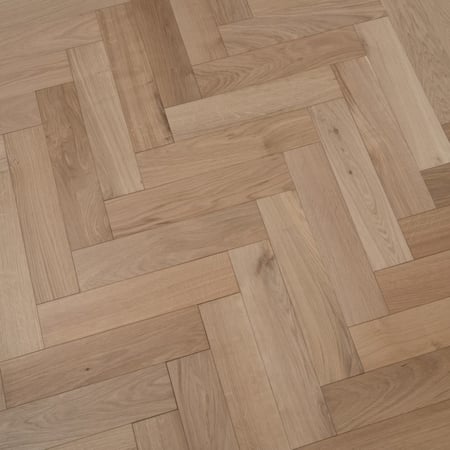
Unfinished Solid Wood Flooring
Top Questions on Solid Wood Flooring
Solid wood flooring is flooring made from a single, solid piece of hardwood, cut directly from the tree and milled into planks.
There are no plywood layers or composite cores just 100% real oak from top to bottom.
The best method is secret nailing onto a plywood or timber subfloor.
This provides maximum stability, allows natural expansion, and ensures the floor can last 50+ years.
If installing over concrete, a full glue-down method with a moisture barrier is the next best option.
Floating solid wood flooring is not recommended due to natural expansion and movement.
Engineered wood is usually better for most modern homes. It’s more stable, handles moisture better, and works with underfloor heating.
Solid wood is 100% natural timber and can be refinished more times, making it ideal for traditional timber subfloors without underfloor heating.
The best choice depends on your subfloor and room conditions.
Solid oak flooring is generally not recommended for use with underfloor heating. Because solid wood naturally expands and contracts with temperature changes, it can move, gap or warp when exposed to consistent heat.
Traditional foam underlay is not usually required for solid wood flooring.
Solid wood is typically secret nailed to a timber subfloor using a breathable membrane, or fully glued to concrete with a moisture barrier.
Underlay is mainly used for floating floors like laminate or engineered wood not for standard solid wood installations.
Since our wood flooring is stored in a warehouse, your home will be a very different environment to the one our flooring is used to. This difference in humidity and temperature can make the flooring expand and contract slightly once it's brought indoors however this small difference could mean your floor gets installed incorrectly.
We recommend acclimatizing your flooring before fitting for a minimum of 7 days. Simply leave the flooring in its box in the room that it'll be fitted in with the top and bottom ends left open. Try to keep the room at the temperature it'll be when you use it.
For more useful information, visit our advice center.
Solid wood flooring is available in a range of hardwood species, each with its own colour, grain pattern, and durability.
The most popular species include:
Oak – The most common choice in the UK, known for durability and natural grain character.
Walnut – Darker in tone with a rich, smooth appearance.
Maple – Light and subtle with a cleaner, contemporary look.
Ash – Similar to oak but slightly lighter with bold grain patterns.
Teak – Naturally oily and highly durable, often used in premium interiors.
Merbau – Reddish-brown tones with strong stability.
Oak remains the most popular species due to its strength, versatility, and timeless appeal, but the best option depends on your desired colour, style, and room use.
General advice for maintaining your wood flooring includes, keeping it regularly swept, clean, and dry. It's recommended when sweeping to use either a hoover with a soft attachment, or a soft broom to avoid marking your floors. When cleaning, a damp mop or cloth will suffice, as long as the flooring is completely dried afterwards. Be wary of excess moisture that will cause it to swell, so AVOID using a steam mop and clean up any stains and spillages immediately.
More useful information can be found in our Advice Center.
We often get asked which glue would you recommend, and having used this company for the past 8 years Rewmar MS Polymer is a one part, modified silane based wood flooring adhesive. Suitable for sticking down any species of wooden flooring to almost any subfloor. It has a high bond strength between the wooden floor and the subfloor when dry, but remains permanently flexible. The flooring is allowed to move as the seasons change but will not crack. The floor will stay adhered to the subfloor. If any adhesive is left on the surface of the wood it is easy to remove either wet or dry (following day) and no special chemicals are required.
Solid wood flooring is durable, timeless, and made from 100% natural hardwood. It can last decades, be sanded and refinished multiple times, and adds long-term value to your home. Its authentic grain and natural character make it a premium, long-lasting flooring choice.
If you're after solid wood , we'd recommend against them for the kitchen. Solid wood flooring can warp in the changing moisture a can be weakened by the water. Oiled floors aren't suitable as they offer less moisture resistance than lacquered floors.
If you're after solid wood for your bathroom we would not recommend the use for this purpose. Over time real wood flooring could warp in the changing moisture and our natural carpets can be weakened by water.
More useful information in our advice center.
Random lengths means the flooring boards come in mixed lengths, rather than all being identical.
Instead of every plank being, say,1900mm long, you might receive boards ranging from:
300mm
600mm
900mm
1200mm
1500mm
All bundled together in the same packs.
Yes solid wood flooring can be sanded and refinished multiple times.
On a typical 18mm solid wood floor, you can usually sand it down several times over its lifespan, depending on the depth of wear and the condition of the boards. This allows you to restore the surface, remove scratches, and even change the finish or colour — helping the floor last for decades.